Residential · Winter Installation
Spray foam insulation in a Winnipeg winter
Direct answer
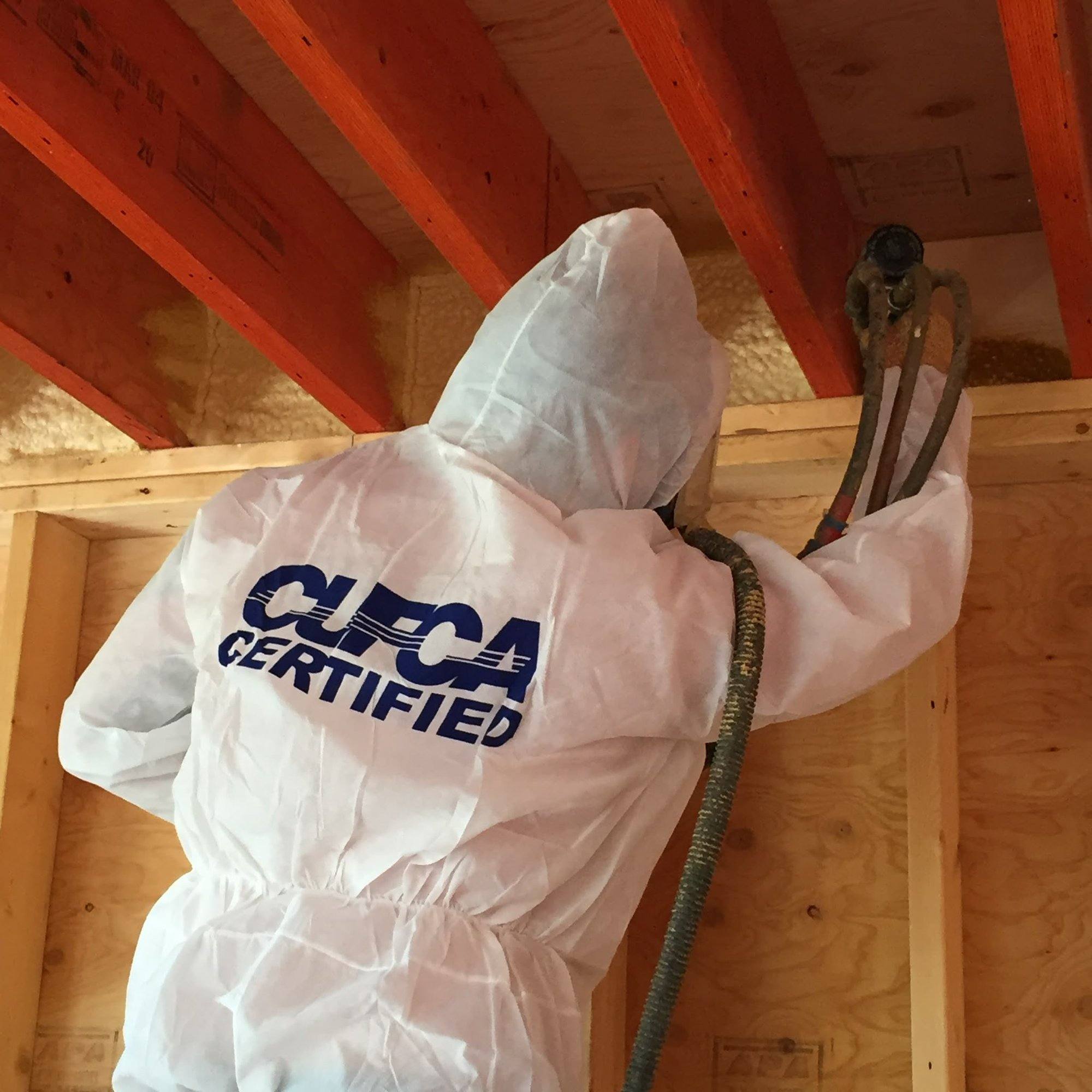
Spray foam insulation is indoor work. Basements, crawl spaces, attics and mid-renovation walls sit inside a building, and Ecologic tents and heats the work area to the temperature the foam's chemistry needs to cure properly — the outdoor thermometer isn't the constraint that stops your roofer or your concrete crew. A Manitoba cold snap at -40°C shuts down roofing, siding and flatwork; it doesn't shut down a basement, crawl space, attic or gutted room getting insulated correctly. If anything, winter is when the problem you're calling about — a cold floor, a drafty rim joist, ice building up at the eaves — is the most obvious it'll be all year.
Source: CAN/ULC-S705.2 spray-applied foam installation practice; exact site setup confirmed at inspection.
01 The mechanism
Exterior trades stop for weather. This isn't an exterior trade.
Roofing, siding, exterior painting and concrete flatwork all depend on outdoor conditions to do their job properly: shingles need a warm-enough deck to seal, coatings need a cure window, concrete needs to stay above freezing while it sets. That's the real reason a Manitoba winter goes quiet for so many trades — not caution, but chemistry and physics that genuinely don't work in the cold.
Interior spray foam has a different chemistry problem, and a different solution: the foam still needs the substrate and the air around it inside an application temperature range, but that space is inside a building we control, not outside one we don't. Tenting and temporary heat bring the work area into range regardless of what's happening past the wall — the same discipline a drywall or framing crew already uses to keep working through winter.
What a Manitoba winter actually stops
Stops: roof tear-offs and re-covers, exterior siding, exterior painting and coatings, concrete flatwork and foundations.
Doesn't stop: basement, crawl space, attic and renovation spray foam — indoor work, in a heated and tented space, on the same standard year-round.
If a contractor tells you an interior job has to wait for spring, ask why. Usually it's a scheduling choice, not a chemistry one.
02 The work
Four indoor jobs on our winter schedule.
Basement insulation
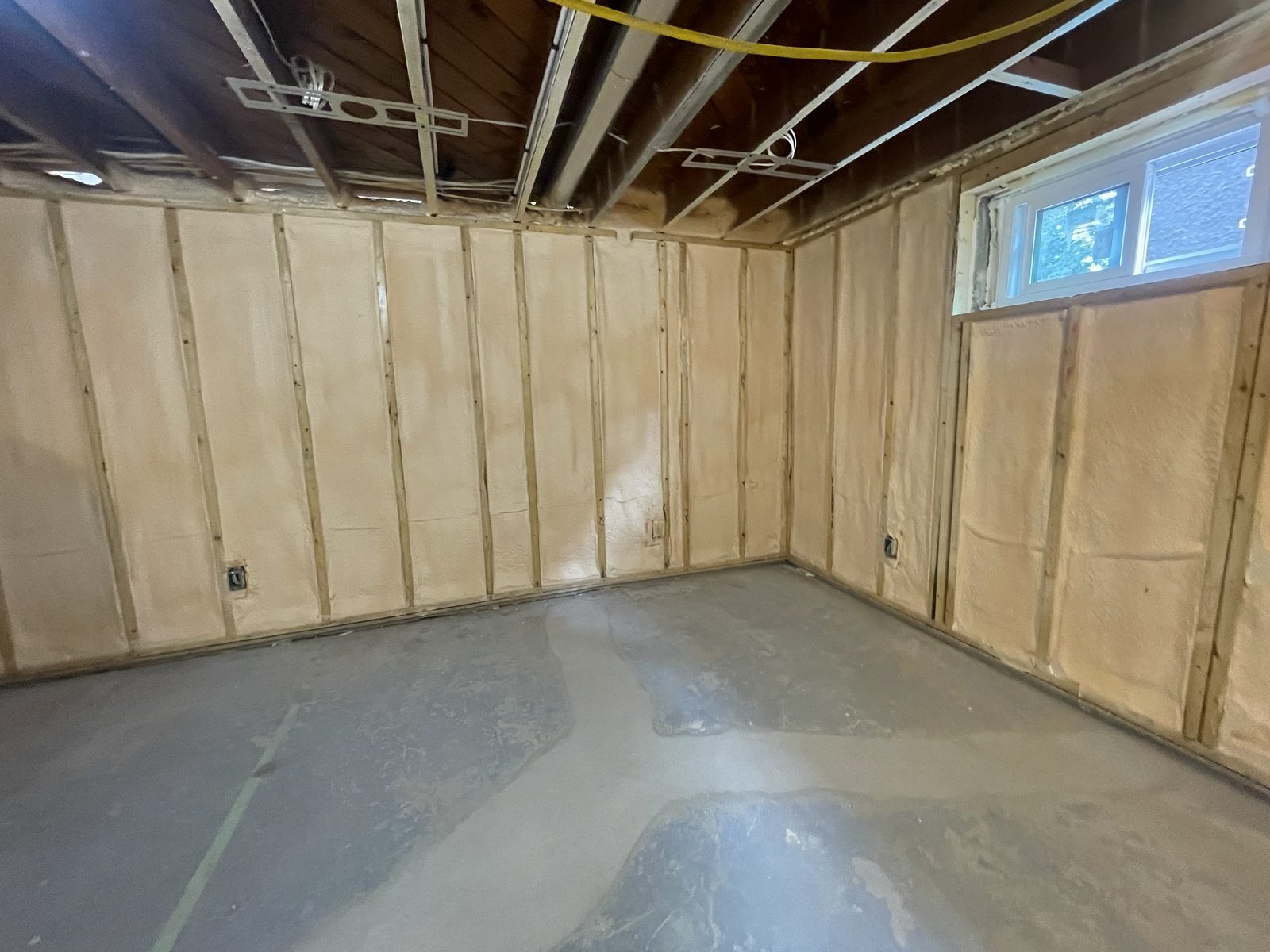
Foundation walls and rim joists, foamed inside a heated basement. The cold outside is exactly the condition that makes an uninsulated basement worth calling about.
Crawl space insulation & encapsulation
Sealing and foaming a crawl space stops the floor above it from tracking the outdoor temperature — the exact complaint that shows up hardest in January.
Attic air-sealing & insulation
Ice dams are a winter symptom of a year-round problem: heat leaking into the attic. Winter is when the icicles make the case for you.
Renovation insulation
A renovation under roof doesn't pause for the season. If your drywaller has a winter start date, your insulation does too.
03 Timing
Why fall and winter are actually a good time to book.
Two things happen at the same time every year. First, the problems this work fixes stop being theoretical: a basement that felt fine in July gets genuinely cold, a crawl space starts chilling the floor above it, ice starts building at the eaves. The need is most visible exactly when it's least comfortable to live with.
Second, the trades that do slow down for winter — roofing, siding, exterior renovation work — stop competing for the same renovation calendar. A homeowner or contractor trying to book an exterior job in July is fighting for a spot against every other exterior job in the city. An interior insulation job booked in the fall or winter is competing against a much shorter list.
None of that changes what the work costs or how it's done. It changes when you can get it done.
04 Honestly
What does actually change in winter.
Not everything about winter work is identical to a July job, and we'd rather say so than pretend otherwise. On the coldest days, more of the setup goes into protecting and heating the work area before spraying starts — that's built into how the job is scheduled, not an extra charge sprung on you. Daylight is shorter, which can affect a crew's start and finish time on a job with awkward access. And the same inspection order applies as any other job: active water, drainage problems or a wet crawl space get fixed before insulation goes in, winter or not.
What doesn't change: the foam, the R-value, the installation standard, and the rebate math, where it applies. A winter quote is priced the same way a summer one is.
05 Questions
Winter installation, answered
Does spray foam insulation work in cold weather?
Yes, for indoor work. Basement, crawl space, attic and renovation insulation happen inside a building, not on its exterior. Ecologic tents and heats the work area to the temperature the foam's chemistry needs to cure correctly, so the outdoor thermometer isn't the constraint it is for a roofing, siding or concrete crew working outside.
Can I get a basement, crawl space or attic insulated in a Winnipeg winter?
Yes. All three are indoor jobs already inside the building envelope, and so is insulation added mid-renovation. Winter is a normal season for this work, not an exception to it.
Is there a minimum temperature for spray foam application?
Manufacturers set an application temperature range the substrate and ambient air need to be in for the two-part chemical reaction to cure properly. We control the work-area temperature with tenting and temporary heat to stay inside that range regardless of the outdoor reading — ask us for the specifics on your job when you call.
Source: CAN/ULC-S705.2 installation practice
Why book in fall or winter instead of waiting for spring?
The problems this work fixes — cold floors, drafty rim joists, ice damming — show up hardest exactly when it's cold, so the need is most obvious right now. And indoor insulation work doesn't compete with the spring and summer rush that fills up exterior trades' schedules, which often means a shorter wait to get booked.
Get on the schedule before the next cold snap.
Basement, crawl space, attic or renovation — indoor work, booked on your timeline, not the weather's.