Residential · Renovations & Additions
Renovation insulation in Winnipeg
Direct answer
A renovation opens the one window you get to insulate correctly: studs and joists exposed, nothing hidden yet. Closed-cell spray foam insulates, air-seals and vapour-seals in a single pass — no separate poly, no second trade, nothing to fix by re-opening the wall in ten years. Ecologic works at the same open-stud stage a drywaller waits for, on your renovation's schedule rather than a season of our own. Foundation walls opened by a basement development, and ceilings opened by an addition or attic conversion, both qualify for Efficiency Manitoba rebates when the project meets program rules — up to $0.06 per ft² per R added on walls, $0.03 per ft² per R added on ceilings.
Sources: CCMC 14133-L · efficiencymb.ca (rates verified July 2026)
01 The opportunity
Open studs are a once-per-renovation opportunity.
Once drywall goes up, whatever's inside the cavity is what you're living with for the life of the wall. Most homeowners never get a second look at a stud bay after the first one — the next time that wall opens is usually a problem, not a choice. A renovation is the one point in a building's life where the decision is still available without demolition.
That makes renovation insulation a different call than a standalone insulation job, even though the material and the crew are the same: the timing is set by your contractor's schedule, not by when a homeowner notices a cold room. We work in on that timing.
If your renovation hasn't opened any walls yet and you're weighing whether it should, our basement, attic and crawl space pages cover the building-science case for each assembly.
Insulate now vs. after drywall
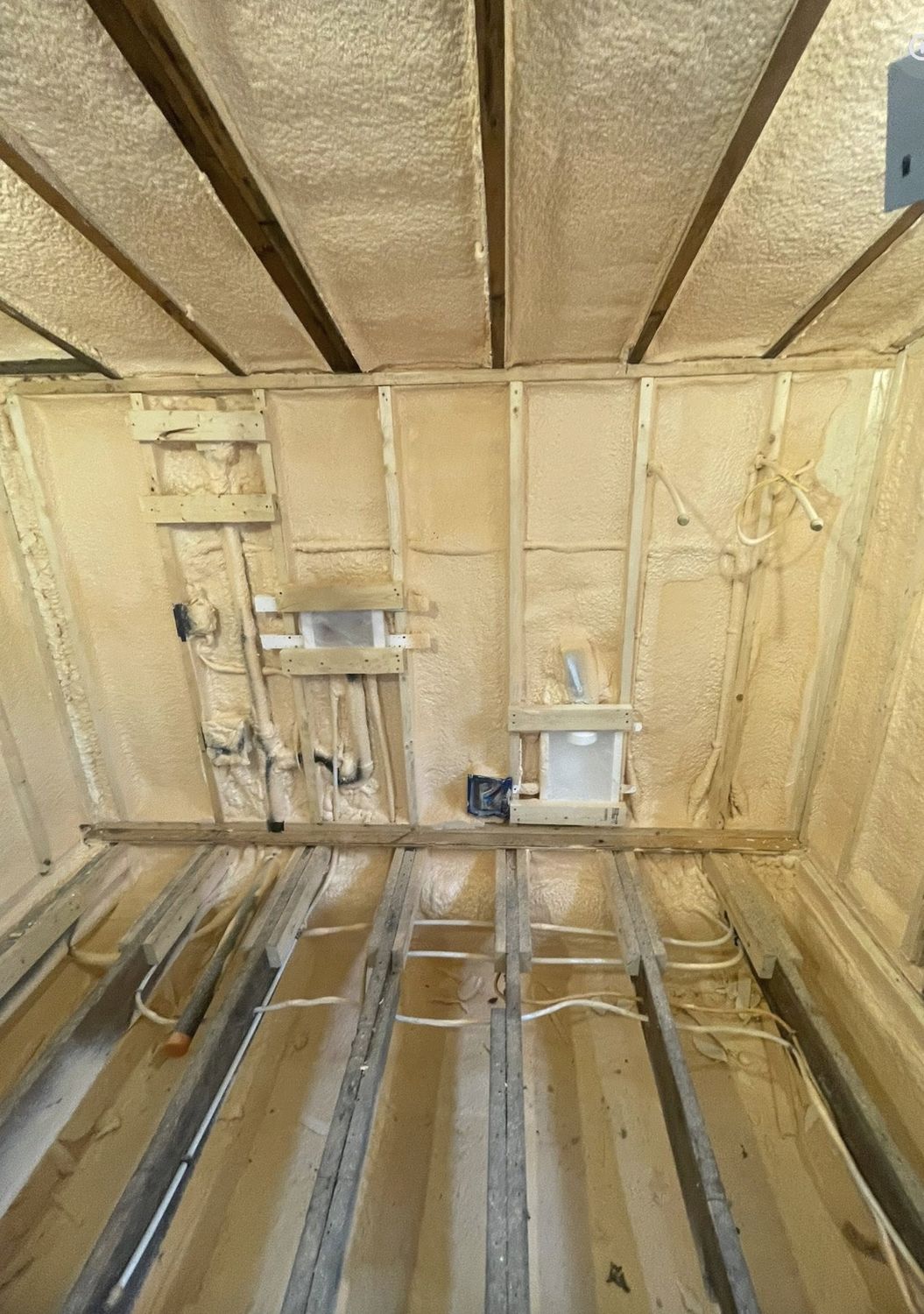
Now (open studs): foam applied directly to the cavity, sized correctly, air-sealed at every penetration, inspected before it's covered.
Later (wall closed): the cavity has to be opened again — demolition, disposal, a second finishing job — to fix anything the original insulation missed.
The cost difference between doing it now and doing it later isn't the foam. It's everything around the foam that has to come apart to reach it.
02 Scenarios
Four ways a renovation opens a wall we should see.
Basement development
Finishing an unfinished basement is a foundation-wall insulation job wearing a renovation's schedule. Same assembly as a standalone basement job — closed-cell foam on the concrete, rim joist sealed — timed to your framer and electrician instead of booked on its own.
Additions & sunrooms
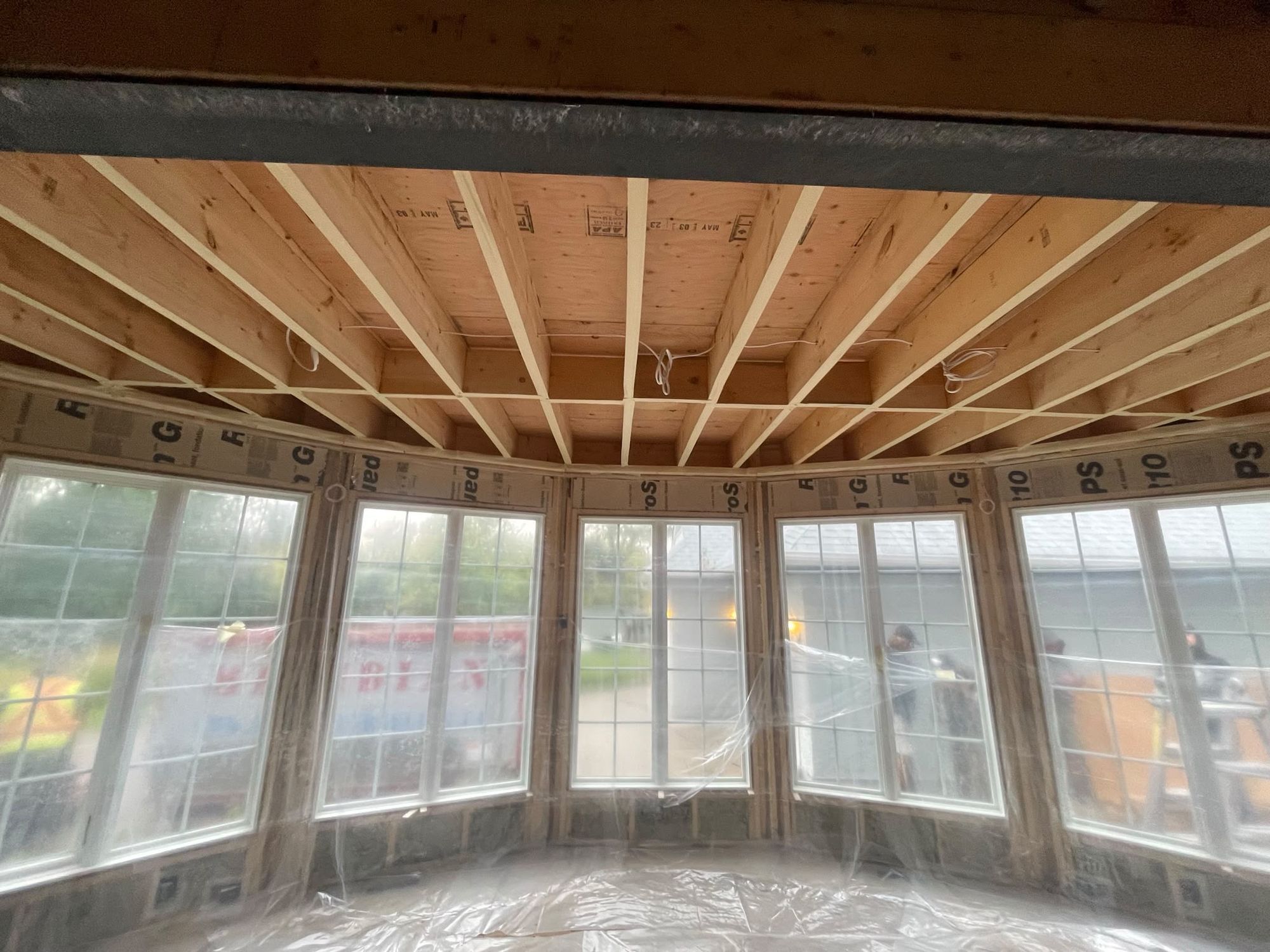
New exterior walls, a new ceiling, and often an awkward transition where the addition ties into the existing house — cantilevered floors, band joists over a walkout, a roofline that doesn't match the original. These transition details are exactly where batt insulation gets the geometry wrong and foam doesn't.
Gut renovations
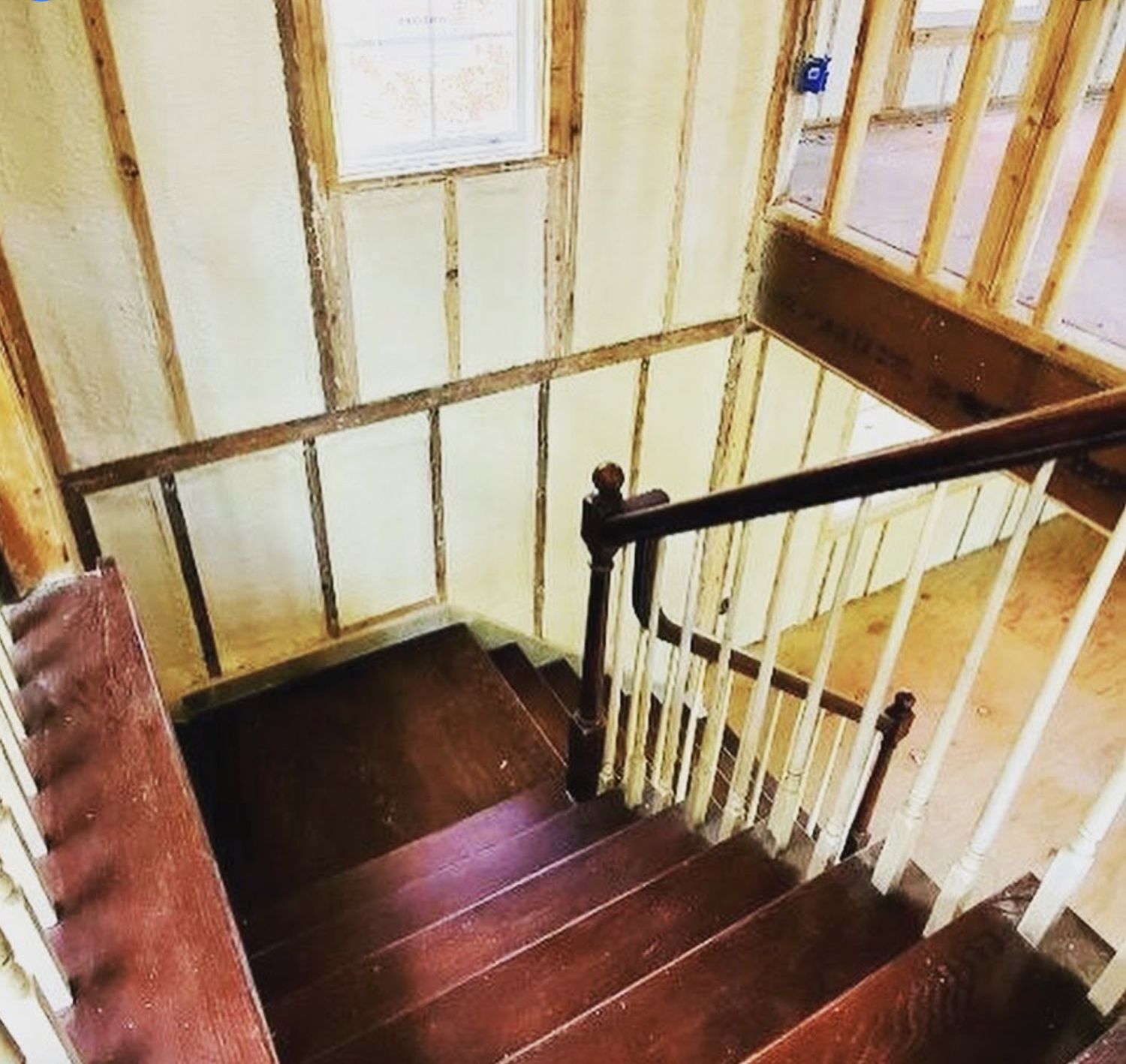
Kitchens, bathrooms and additions taken down to the studs are a genuine second chance at an exterior wall's insulation, not just its finishes. If the wall's already open for the reno you're doing anyway, the marginal cost of doing the insulation right is far lower than a dedicated job later.
Attic conversions
Finishing attic space as part of a larger renovation usually means kneewalls, rafters and dormers — tight, irregular framing where loose-fill can't go and foam is the only material that actually fills the cavity. See our attic insulation page for the air-seal-first system.
03 Scheduling
We work around your renovation, not the other way around.
Insulation is a schedule-critical trade on any renovation: it has to happen after framing and rough-ins are done (and inspected, where your permit calls for it), and before drywall closes the cavity for good. Booked in the wrong order, it either delays the drywaller or gets skipped under deadline pressure — which is how a renovation ends up with a wall that was never actually insulated.
Because this work happens inside a building already under roof, it runs on your renovation's calendar rather than the weather's. A December drywall deadline is a booking question, not a forecast question — see our winter installation page for the full case on why indoor spray foam doesn't pause for a Manitoba cold snap the way your exterior trades do.
Where insulation sits in the sequence
Before us: framing, electrical rough-in, plumbing rough-in, mechanical rough-in, inspection if your permit requires one.
Us: closed-cell foam on the open cavities — walls, ceiling, rim joist, foundation, whichever your renovation exposed.
After us: vapour-barrier or insulation inspection (if applicable), drywall, finishing.
Tell us your drywaller's start date when you call. We book to it.
04 Rebates
Renovation work qualifies the same way a standalone job does.
Efficiency Manitoba doesn't ask whether the wall opened because of a dedicated insulation call or because your renovation exposed it. The rate depends on what got insulated: $0.06 per ft² per R-value added on foundation walls (a basement development), $0.03 per ft² per R-value added on ceilings (an attic conversion or an addition's roof), both capped at material cost.
Eligibility still depends on heat source and existing insulation, and pre-approval has to be in place before work starts — which means telling us about the rebate before the framer's even finished, not after the foam is sprayed. We confirm eligibility and file the application as part of quoting your renovation.
| Assembly opened by your reno | Rebate rate |
|---|---|
| Foundation wall (basement development) | $0.06 / ft² / R added |
| Ceiling (attic conversion, addition roof) | $0.03 / ft² / R added |
| Cap | Insulation material cost |
| Pre-approval | Before work starts |
| R-value basis | CCMC-verified LTTR only |
05 Questions
Renovation insulation, answered
Can spray foam be added during a renovation instead of a standalone insulation job?
Yes — it's the more common way we do the work. Once a renovation opens a wall, ceiling or foundation to the studs, that's the same open-stud stage a standalone insulation job creates on purpose. We work around your renovation's schedule: in after rough-ins are inspected, out before drywall closes the cavity.
Does a basement development qualify for the same rebate as a basement insulation job?
If the work insulates the foundation wall, yes — the same $0.06 per ft² per R-value added rate applies whether the job started as a standalone insulation call or opened up as part of a larger renovation. Pre-approval before work starts, CCMC-verified R-values only.
Source: efficiencymb.ca, verified July 2026
Can insulation work happen in winter during my renovation?
Yes. This is indoor work inside a building already under roof, so it runs on your renovation's schedule rather than the outdoor forecast. See our winter installation page for the full explanation.
What stage does my renovation need to be at before I call?
Framing and rough-ins done and, where your permit requires it, inspected — walls and ceilings open to the studs, nothing closed yet. Call before your drywaller is booked; foam has to go in before the cavity closes, not after.
What does renovation insulation cost?
Same material pricing as any spray foam job — $1.75–$2.50 per board foot installed — but the total depends on how many walls or ceilings your renovation opened. There's no single renovation price; the quote is written after we've seen the space.
Don't close the wall until it's insulated right.
Tell us your drywaller's start date — we quote and book to it.