Portable & Permanent · Seasonal-Use Buildings
Ice shack & bunkie insulation in Manitoba
Direct answer
Spray foam suits ice shacks, bunkies and tiny cabins for three reasons specific to how these buildings actually get used: it delivers more R-value per inch than batt insulation, which keeps a towable shack lighter; it's moisture-tolerant where a fish house sees meltwater and humidity all season; and it air-seals as it insulates, which is what determines how fast a small heater brings a cold building up to temperature on a January weekend. We insulate both new builds and, where framing is accessible, existing shacks and bunkies across Manitoba's lake country.
Applies to: portable and permanent ice shacks, bunkies, tiny cabins
01 The problem these buildings pose
Light, wet and intermittently heated. That combination rules out most insulation.
Weight, for anything towed. A towable ice shack has a trailer rating and a truck to think about. Spray foam's higher R-per-inch means a thinner wall does the same job a thicker batt wall would, which keeps total weight down without giving up warmth.
Moisture, for anything near open water. Meltwater off boots and gear, humidity rising off the hole, and freeze-thaw at floor level all work against fibrous insulation, which loses R-value when it's wet and can take a long time to dry out between trips. Closed-cell foam doesn't absorb it.
Intermittent heat, for anything used a few days a month. A building that's only heated on weekends spends most of its life at outdoor temperature. How fast it recovers when the heater goes on depends far more on air-sealing than on R-value alone, and foam air-seals every seam as it's applied.
A note on product choice
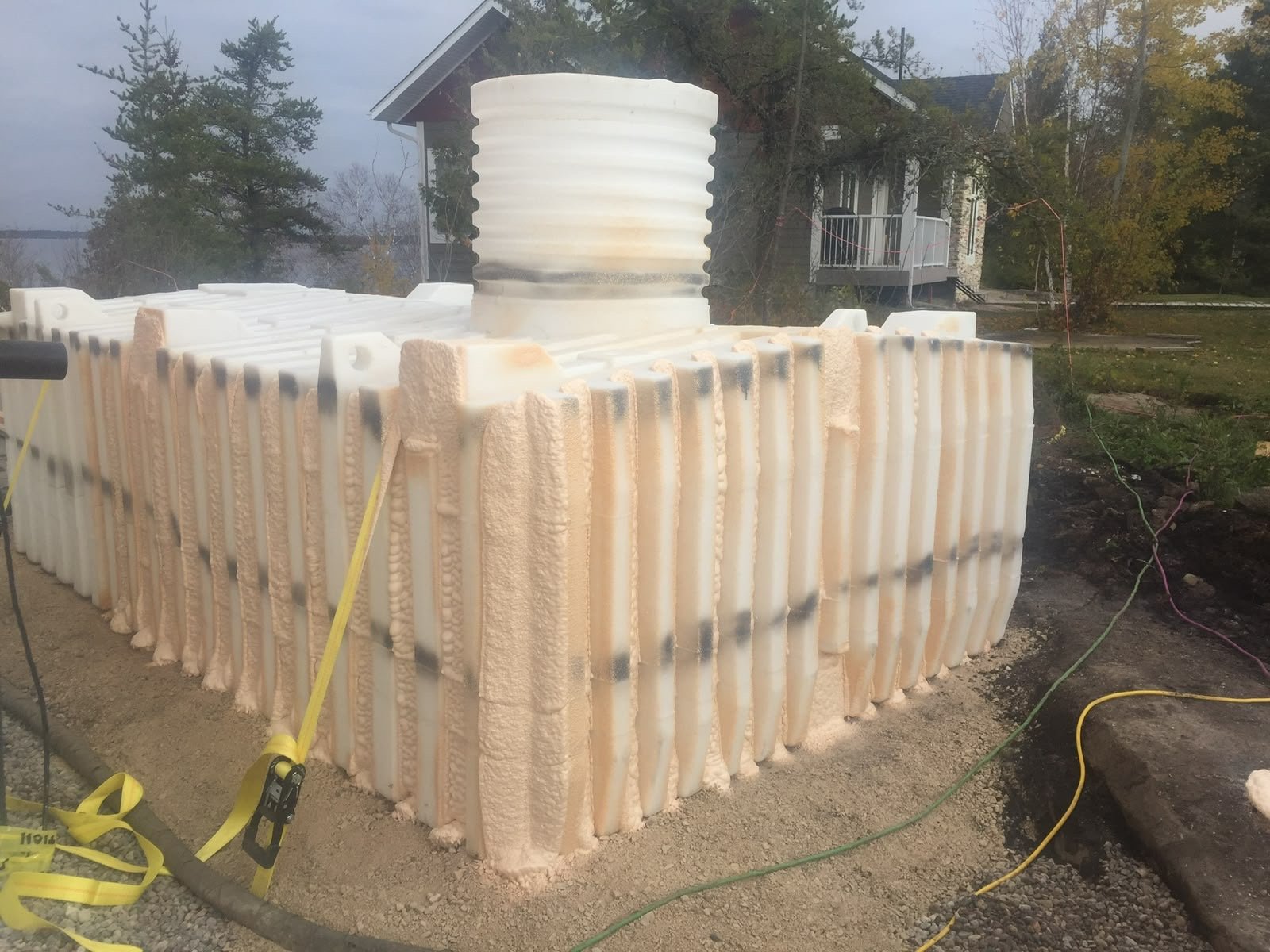
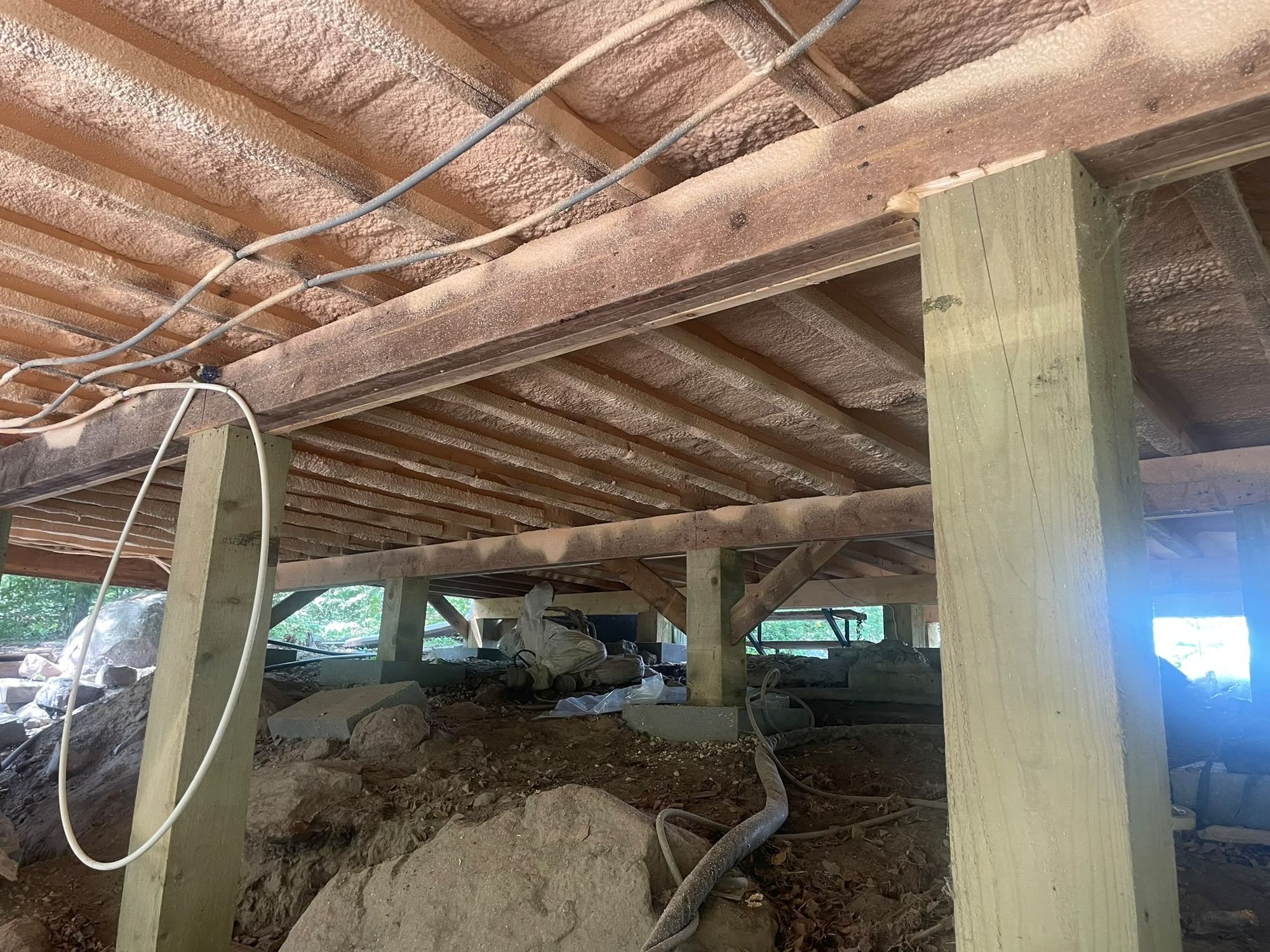
Closed-cell foam is usually the right call on floors and lower walls, where moisture exposure is highest. Open-cell can make sense higher up, or in a permanent bunkie with a proper vapour strategy, where sound-deadening and cost matter more than moisture tolerance. We'll walk through which fits your build.
02 Application judgment
What we'd actually tell you
Good fit
New-build towable ice shacks. Framing is open, weight is a real constraint, and foam solves both the R-value and the air-seal problem in one pass.
Permanent fish houses. Closed-cell on the floor and lower walls handles the wet conditions other insulation can't.
Bunkies and tiny cabins used a few weekends a season. Fast heat-up and no nesting material for mice, both of which matter more in a building that sits empty most of the time.
Worth a conversation first
Existing shacks with finished interior walls. We can often still get foam into a floor or accessible bay, but full-wall coverage may mean opening up finish first. We'll be straight about what's realistic before you commit.
Very small, ultra-light DIY shacks. Below a certain size, the labour minimum on a spray job can outweigh the benefit versus rigid foam board you install yourself. We'll tell you if that's your situation.
03 Questions
Ice shacks & bunkies, answered
Is spray foam worth it for a towable ice shack?
For anything you tow regularly, weight matters as much as R-value. Spray foam delivers more R per inch than batt or board insulation, which means a thinner, lighter wall for the same heat retention. It also air-seals every seam in one pass, which is what actually determines how fast a small heater brings the shack up to temperature.
Does spray foam handle the moisture inside a fish house?
Closed-cell foam is the right call here. Fish houses see meltwater, humidity from the hole, and freeze-thaw cycling at the floor and lower walls. Closed-cell foam doesn't absorb water the way batt insulation does.
What about a bunkie only used a few weekends a year?
Seasonal-use buildings have two problems batts don't solve well: mice, and slow warm-up. Foam gives rodents nothing to nest in, and because it air-seals as it insulates, a properly foamed bunkie heats up far faster than a batt-and-poly building.
Can you insulate a shack that's already built?
Often, yes, for open stud bays, floors, or attic spaces. Full coverage on a shack with finished interior walls may mean opening up finish first. We'll tell you honestly what's realistic when we see it.
Get a shack or bunkie quote.
Tell us the size, whether it's towed, and how it's built. Written quote, no pressure.