Agricultural · Quonsets, Shops & Barns
Quonset, shop and barn insulation in Manitoba
Direct answer
Steel buildings drip because warm, humid interior air touches metal that sits below the dew point, and the moisture condenses on it. The humidity comes from livestock respiration, curing grain, or snow melting off parked equipment. Insulation that leaves an air gap against the steel doesn't fix this. Closed-cell spray foam bonds directly to the curved shell, keeps interior air off the cold metal, and works as insulation, air barrier and vapour barrier in one pass: a verified R-11.1 at 2 inches, CCMC 14133-L. It also stiffens the shell: compressive strength of 175 kPa (ASTM D1621). Published Canadian figures put quonset foam at $4–$7 per square foot. Ecologic sprays quonsets, shops and barns across agricultural Manitoba: Steinbach, Winkler, Brandon, Portage la Prairie and the rural municipalities between.
Sources: CCMC 14133-L · CAN/ULC-S705.1/.2 · published Canadian quonset cost surveys (verified July 2026)
01 The mechanism
That drip is coming out of the air, not through the steel.
Air holds moisture, and warm air holds more of it than cold air. When air touches a surface colder than its dew point, the moisture it can no longer hold comes out of the air and onto that surface. In January, the steel skin of an uninsulated quonset runs close to outdoor temperature, which makes every square foot of the shell a condensing surface for the air inside.
The air inside is rarely dry. Livestock put moisture into it with every breath. Grain gives up moisture as it cures in storage. Snow and ice melt off equipment parked after a day's work. Even an unheated building loads up: humid fall air gets trapped inside, and the moisture cycles between frost and drip all winter.
The pattern owners know: frost builds on the underside of the steel through the cold snaps. Then a mild day comes, or the heater runs, and it rains inside the building. Onto tools, onto stored grain, onto the equipment you put there to keep dry. And where the wet steel can't dry, it rusts from the inside out.
The condensation chain
1. Humidity enters the air: livestock respiration, curing grain, snow-melt off equipment.
2. Uninsulated steel sits near outdoor temperature, below the dew point of that air.
3. Moisture condenses on the metal: frost in the cold, drip in the thaw.
4. Wet steel corrodes; wet grain spoils; wet tools rust.
Break the chain at step 2: put insulation on the steel so no interior air ever touches a below-dew-point surface. That is the whole job.
This is one of three different condensation mechanisms that get lumped together on a farm. If you're seeing moisture in a livestock barn or a grain bin instead of a bare steel wall, the fix may not be insulation at all — see the building-science breakdown of why ag buildings condense differently.
02 The material
Closed-cell foam was built for curved steel.
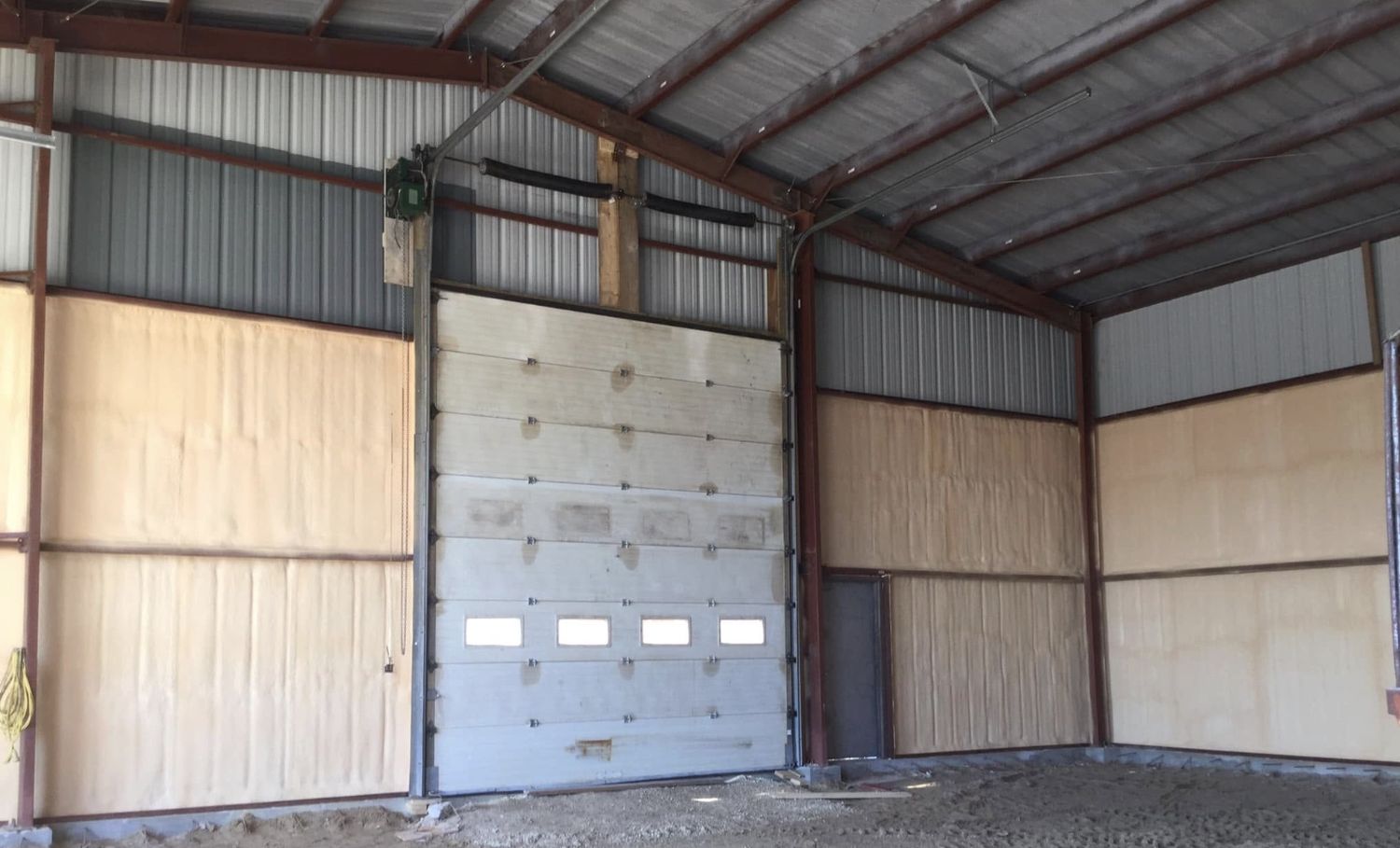
A quonset is one continuous curve of corrugated steel. Batts don't hang on it, rigid board doesn't bend to it, and blanket systems leave the air gap that keeps the condensation going behind them. Spray foam is applied as a liquid, so the shape of the substrate doesn't matter. It bonds to the corrugations, the ribs, the bolt heads, all of it, with no gap for humid air to reach the metal.
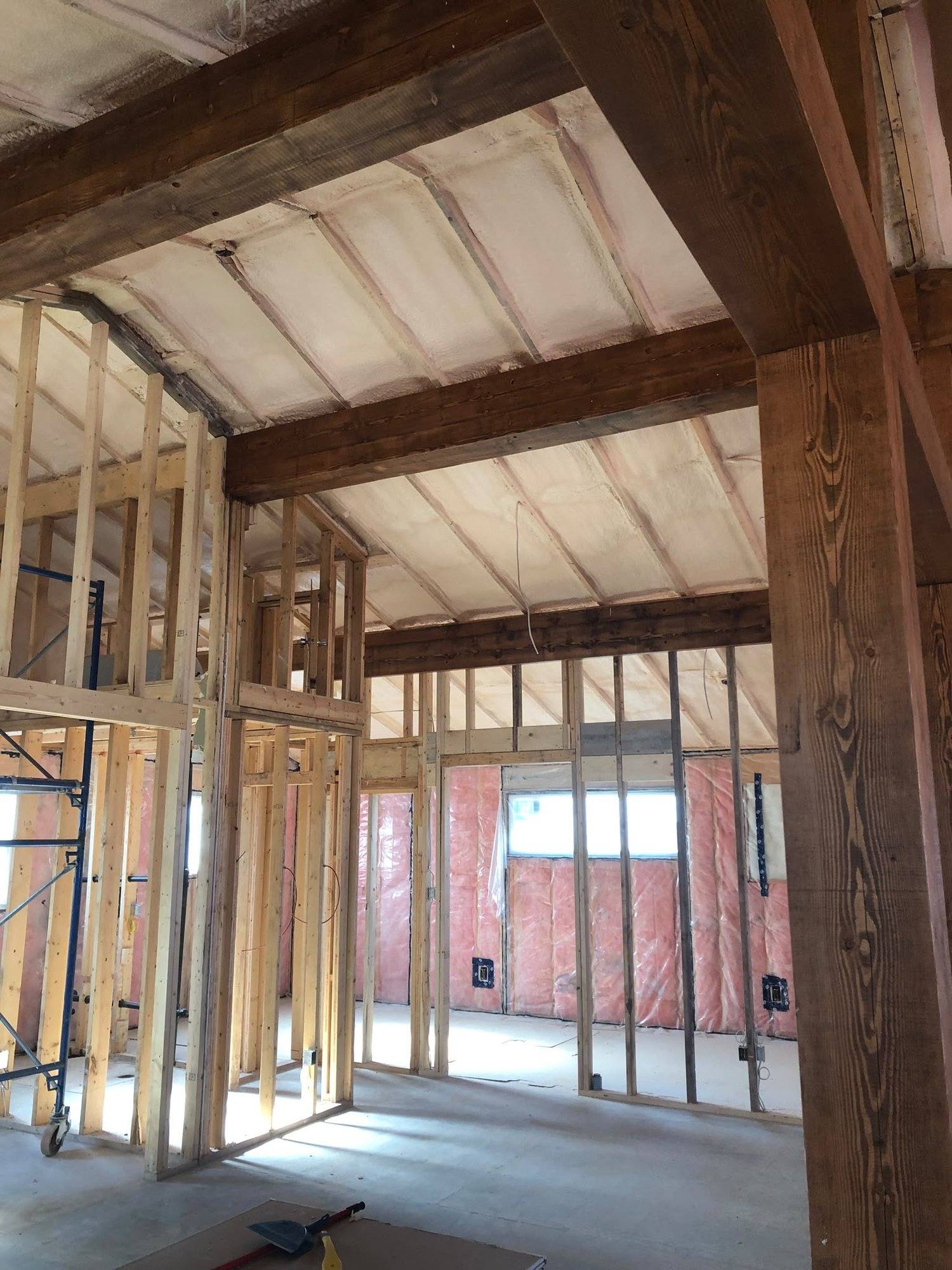
At 2 inches, the foam is its own vapour barrier (a water vapour permeance design value of 39 against the code limit of 60), so moisture in the interior air can't diffuse through to the cold steel either. The same layer is a code-recognized air barrier, which closes the leakage paths at end walls, doors and the ridge that make steel buildings expensive to heat.
And it adds structure. The foam cures rigid, with a compressive strength of 175 kPa (ASTM D1621), bonded across the full shell. A sprayed quonset is noticeably stiffer (the skin stops drumming in the wind), and the foam layer keeps interior moisture off the steel, which removes the condensation that feeds corrosion.
| Property | Value |
|---|---|
| Insulation value | R-11.1 @ 2 in · R-17.5 @ 3 in (LTTR, S770-15) |
| Vapour barrier | At 2 in — permeance 39 vs limit 60 |
| Air barrier | Code-recognized per CAN/ULC-S705.1 |
| Compressive strength | 175 kPa (ASTM D1621) — stiffens the shell |
| Adhesion | Full bond to curved / corrugated steel |
| Listing | CCMC 14133-L, Type 2 closed-cell |
CCMC-listed (14133-L); the current formulation uses an HFO blowing agent (GWP of 1) per the manufacturer's 2024 TDS. Made by CUSE (Waterloo) in Brantford, Ontario. Canadian foam, tested to Canadian standards.
03 The economics
Propane is bought by the litre. Air leakage burns it.
A heated shop on propane pays for its shell every month of the winter. An uninsulated steel building loses heat two ways at once: conduction straight through the skin, and air leakage at every seam, door and end wall. Foam attacks both in one pass, R-value on the steel and an air seal across the shell. We won't promise you a savings percentage; nobody honest can without knowing your building, your setpoint and your doors. But bare steel versus a foamed shell is not a subtle difference on a propane bill.
Storage buildings have a different economy. Potato and grain storage live or die on temperature control and drip: condensate falling on a pile starts spoilage, and a shell that swings with the weather makes ventilation management harder than it needs to be. Foam holds the interior surface above the dew point and slows the swings, so your ventilation system manages the crop instead of fighting the building.
On cost, the published Canadian range for quonset spray foam is $4–$7 per square foot. The board-foot math underneath it is in the table, and on every quote we write.
| Basis | Figure |
|---|---|
| Prairie installed rate | $1.75–$2.50 / board foot |
| 2 in (R-11.1, vapour barrier) | $3.50–$5.00 / ft² |
| 3 in (R-17.5, heated shop) | $5.25–$7.50 / ft² |
| Published Canadian anchor | $4–$7 / ft² |
| Measured on | Steel surface area, not floor area |
A board foot is 1 ft² at 1 inch thick. A curved shell has more steel than floor; a 40×80 quonset is well over 3,200 ft² of surface. We measure, then quote.
04 The work
Big buildings, documented work, straight answers.
Every job runs to CAN/ULC-S705.2, the national installation standard: substrate temperatures checked, pass thicknesses controlled, density verified, daily work records kept. Our installers carry CUFCA photo ID and the work is covered by $2M liability insurance.
Large buildings get an extra layer you should know about: CUFCA makes third-party inspection mandatory on any job using more than 9,999 kg of foam. Big quonsets, barns and storage buildings reach that threshold. That means an independent inspector checks the work, not just our own daily testing. Ask any contractor bidding your building how their large-job inspection works; the answer tells you a lot.
We run the ag belt from Winnipeg: Steinbach and the southeast, Winkler and the Pembina Valley, Portage la Prairie, Brandon and the Westman municipalities, and the rural roads between. The rig is self-contained; a yard site without services is normal for us. Book before freeze-up; unheated buildings are hard to spray in deep cold, and the calendar fills from September.
Where foam is the wrong answer: an unheated building used purely for cold, dry storage may not need insulation at all. Sometimes the drip problem is a ventilation problem, fixed with ridge and gable airflow for a fraction of the cost. If that's your building, we'll say so and leave the quote unwritten. Heated commercial buildings in the city are covered on the commercial page; tanks and process work on the industrial page.
05 Questions
Steel buildings, answered
Why does my quonset drip in winter?
Humid interior air (from livestock, curing grain or snow-melt off equipment) touches steel that's below the air's dew point, and the moisture condenses on the metal. Frost builds through the cold, then rains down in a thaw or when the heater runs. The fix is keeping interior air off cold steel, which is what bonded foam does.
How do I stop condensation in a metal shop?
Insulation bonded directly to the steel, with no air gap behind it. Batts and blanket systems let humid air reach the metal behind the insulation, where it condenses out of sight and feeds rust. Two inches of closed-cell is insulation, air barrier and vapour barrier in one layer. Ventilation still handles the humidity source. Foam controls the surface; ventilation controls the air.
Sources: CCMC 14133-L · CAN/ULC-S705.1
How thick should the foam be on steel walls?
Two inches minimum for condensation control: that's the vapour-barrier threshold and a verified R-11.1. Heated shops typically run 3 inches (R-17.5). The quote states thickness and the CCMC-verified R it delivers.
What does quonset insulation cost in Canada?
Published Canadian figures run $4–$7 per square foot. Underneath: Prairie closed-cell at $1.75–$2.50 per board foot means 2 inches costs $3.50–$5.00/ft² and 3 inches $5.25–$7.50/ft², measured on steel surface area, not floor area. Written quote with the math shown.
Do you spray barns with livestock inside?
Not the section being sprayed. Animals can't be in the work zone during application or curing. We stage in sections: stock out of the zone, spray, ventilate, re-occupy per the 25-hour listed time-to-occupancy. Bay by bay on some barns, an empty-barn window between groups on others. Planned with you before we quote.
Source: CCMC 14133-L time-to-occupancy listing
Stop the drip before it costs you a crop or a shell.
Measured quote from steel surface area, staging planned around stock and storage.