2lb Medium-Density · Grizzly Gold HFO
Closed-cell spray foam in Winnipeg
Direct answer
Closed-cell spray foam is the only insulation that is also a code-recognized air barrier and, at 2 inches, a code-recognized vapour barrier. The 2lb foam Ecologic installs delivers a verified LTTR of R-11.1 at 2 inches (R-5.3 at 1 inch, R-17.5 at 3, R-24.1 at 4, third-party tested to CAN/ULC-S770-15) and is made in Canada with an HFO blowing agent. In Manitoba's climate it is the default choice below grade, on rim joists, in crawl spaces and on steel buildings; in deep open attics, other materials often win on cost. Installed to CAN/ULC-S705.2 by certified installers, across Winnipeg and all of Manitoba.
Sources: CCMC 14133-L · NBC 9.25 · CAN/ULC-S705.1/.2
01 The material
Three building functions. One application.
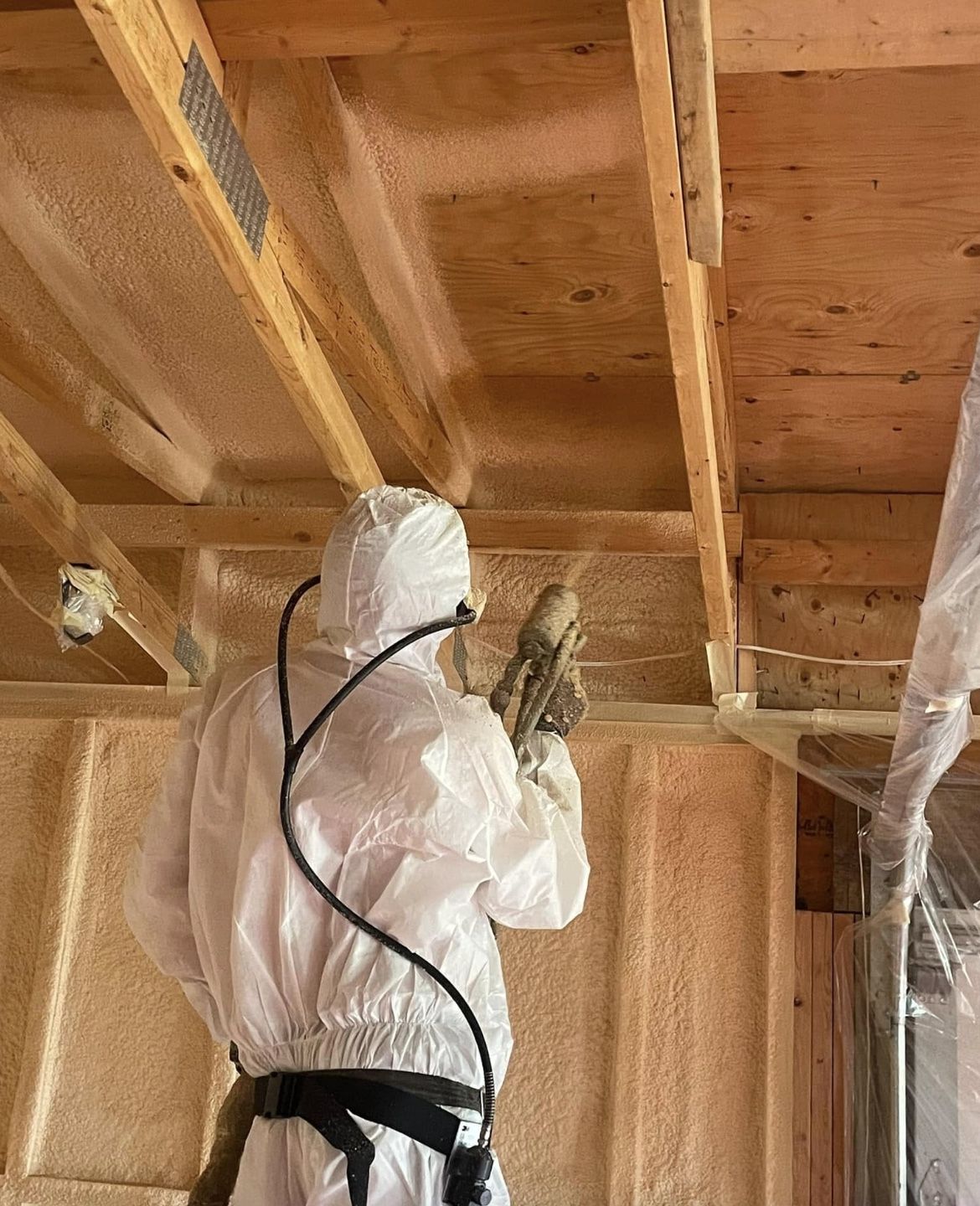
Medium-density (2lb) closed-cell polyurethane foam is sprayed as a liquid and expands into a rigid, fully adhered layer of sealed cells. That structure is what makes it different from every fibre insulation on the market:
Insulation. R-5.3 to R-6.0 per inch long-term depending on thickness (per-inch LTTR rises with depth). No 2lb closed-cell foam sold in Canada tests above roughly R-6 per inch on a long-term, code-accepted basis — if a quote claims more, ask which test method produced the number. That's the highest verified R-per-inch of any common insulation, and it matters when you're working inside a 2x6 wall or a shallow rim joist.
Air barrier. Air barrier at 1 inch: tested air permeance 0.002 L/s·m² (ASTM E2178), ten times tighter than the code's 0.02 limit. In most older Manitoba homes, more heat escapes through air leakage than through conduction.
Vapour barrier. At 50 mm its design permeance is 39 ng/(Pa·s·m²), under the code's 60 limit. That's measured on cores with the skins removed, so installed foam runs lower. No poly, no staples, no gaps at every stud.
The product we spray
Grizzly Gold MD CC
Made in Brantford, Ontario by CUSE of Waterloo, a Canadian foam engineered for Canadian climates, listed with the National Research Council's Canadian Construction Materials Centre as CCMC 14133-L. The current formulation uses an HFO blowing agent (global warming potential of 1) per the manufacturer's 2024 TDS.
We are licensed for the full Grizzly line: 2lb closed-cell, 0.5lb open-cell and 3lb roofing foam.
02 Specifications
The numbers, from the listing
Every value below comes from the CCMC listing or the standard cited: the same documents your building inspector and Efficiency Manitoba use.
| Property | Value | Source |
|---|---|---|
| Long-term thermal resistance (LTTR), 50 mm (2 in) | R-11.1 (RSI 1.92) | CCMC 14133-L · S770-15 |
| LTTR ladder, 1 / 2 / 3 / 4 in | R-5.3 · R-11.1 · R-17.5 · R-24.1 | 2024 TDS (S770-15, third-party) |
| Water-vapour permeance, 50 mm | 39 ng/(Pa·s·m²) design value (skins removed; installed lower) | CCMC 14133-L |
| Qualifies as code vapour barrier at | 50 mm (2 in) | NBC 9.25 (≤60 limit) |
| Air permeance (air barrier at 1 in) | 0.002 L/s·m² — 10× tighter than the 0.02 code limit | 2024 TDS (ASTM E2178) |
| Compressive strength | 175 kPa | 2024 TDS (ASTM D1621) |
| Minimum site density | 34.5 kg/m³ (2.2 lb/ft³) | CCMC 14133-L |
| Time-to-occupancy, retrofit (ventilated) | 25 hours | CCMC 14133-L |
| Material standard | CAN/ULC-S705.1 | Listing basis |
| Installation standard | CAN/ULC-S705.2 | Our obligation |
03 Application judgment
Where closed-cell wins, and where we'll talk you out of it
A contractor who recommends the same product for every assembly is selling, not engineering. The honest map:
Closed-cell is the right answer
Basement and foundation walls. Moisture-tolerant against concrete in Red River clay conditions, insulation + vapour barrier in one.
Rim joists. The leakiest 40 square feet in most Winnipeg homes; foam air-seals geometry batts can't.
Crawl spaces. Ground moisture, cold floors, radon-entry sealing: this is closed-cell's home turf.
Cottages. High R in thin walls, freeze resilience, no batts for mice to nest in.
Steel buildings: quonsets, shops, barns. Adheres to the curve, stops condensation drip at the source, stiffens the shell.
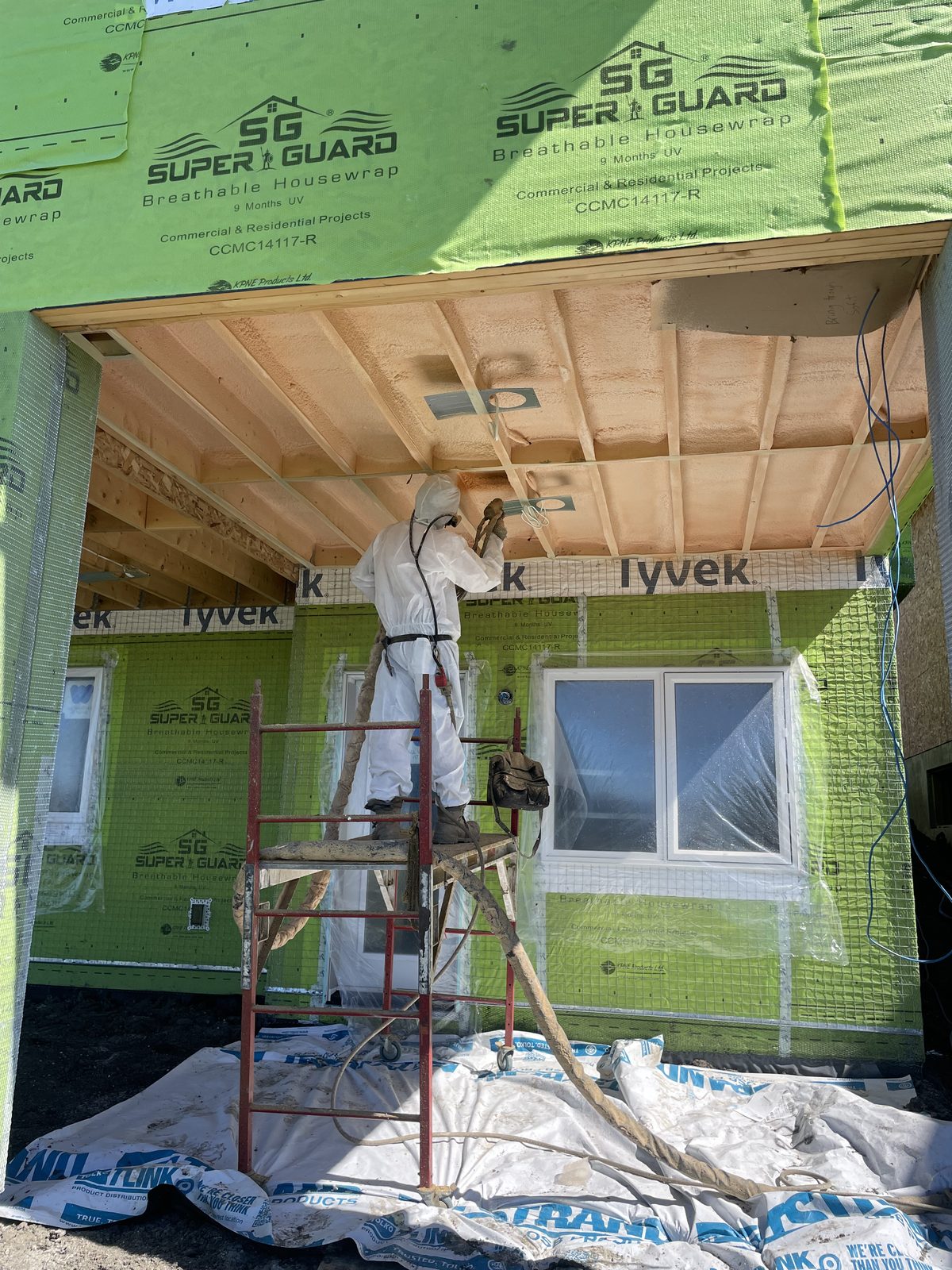
Cathedral and flat roofs. Where there's no room for a vented assembly.
Think twice
Deep open attics. Once the ceiling plane is air-sealed (a job foam does brilliantly in a 1–2 inch pass), topping up to R-50+ with blown-in insulation usually beats foaming the whole depth on dollars per R. We do the hybrid.
Interior walls needing future access. Foam is permanent. Wiring and plumbing changes get harder. Sometimes that's fine; you should decide knowingly.
Assemblies that need to dry. A few wall types rely on drying toward the interior; closing them with a vapour-tight layer needs a proper assembly review first. We check before we spray, not after.
Watch a hybrid install
 EcoLogic On Site: Gimli, Manitoba
2lb closed-cell foam applied over mineral-wool batts: a hybrid assembly, on video from start to finish.
04 Climate zone 7A
Winnipeg is a 5,670 heating-degree-day city. Design for it.
Most spray foam advice on the internet is written for US climates three zones warmer than ours. At Winnipeg's design temperatures, vapour drive is relentless, condensation planes are unforgiving, and air leaks turn into frost buildup inside assemblies.
Closed-cell foam suits this climate for a specific physical reason: it stops both the heat loss and the moisture transport in a single layer, so there is no cold surface inside the assembly for interior moisture to find. That's why it's the standard answer against concrete and steel here: the two materials that are always cold and always condensation-prone.
Manitoba's energy code (NBC 9.36 at Tier 1, with the HRV the province requires in new homes) sets effective R-value targets (R-16.9 for foundation walls with HRV), and "effective" counts thermal bridging, which is where high R-per-inch materials earn their keep.
05 Cost
What it costs, honestly
Professionally installed closed-cell foam in Prairie markets typically runs $1.75–$2.50 per board foot (one ft² at 1 inch); national 2026 surveys report up to $5 for small or complex jobs. Access, prep, thickness and season all move the number, which is why we quote from measurements, in writing, with the R-value math and the Efficiency Manitoba rebate estimate shown before you commit.
Rebates are real money here: foundation-wall work pays $0.06 per ft² per R added (pre-approval required, CCMC-verified R-values only, which our foam's listing provides).
06 Questions
Closed-cell, answered
Do I need a vapour barrier with closed-cell foam?
At 2 inches or more, no. The foam is the vapour barrier: design permeance 39 ng/(Pa·s·m²) on the listing (measured skins-off; installed foam runs lower), versus the code's 60 limit. The exception is hybrid assemblies (thin foam + batts), which need a vapour-barrier ratio check under NBC 9.25.5.2. We run that check as part of the quote.
Source: CCMC 14133-L · NBC 9.25
What R-value per inch — really?
The verified LTTR ladder: R-5.3 at 1 inch, R-11.1 at 2, R-17.5 at 3, R-24.1 at 4, third-party tested to CAN/ULC-S770-15, on the 2024 TDS with CCMC 14133-L. Per inch that's R-5.3 to R-6.0 depending on thickness, because per-inch LTTR rises with depth. If a quote cites "up to R-7," ask for the CCMC listing — Efficiency Manitoba will.
Source: CCMC 14133-L · 2024 TDS (CAN/ULC-S770-15)
How thick should it be?
We hold a firm floor of 2 inches on any closed-cell pass, and default to quoting 3 inches wherever the assembly allows it — thinner passes are where callbacks and under-performance happen. Two inches gets you the vapour barrier and R-11.1; foundation walls targeting the code's R-16.9 effective (with HRV) typically take 3 inches (R-17.5); rim joists 2–3 inches. Thickness is specified per assembly on our written quote with the code target shown.
Source: NBC 2020 9.36 Tier 1 (Manitoba adoption)
Is it worth the premium over open-cell?
Below grade, on rims, in crawl spaces, on steel: yes. Closed-cell brings vapour control, moisture tolerance and rigidity open-cell doesn't have. In a deep open attic, an air-seal pass plus blown-in top-up often wins on cost. We'll tell you which case yours is.
What does it cost in Winnipeg?
About $1.75–$2.50 per board foot installed in Prairie markets (up to $5 in national surveys for small/complex work). Written quote, measured areas, rebate math included.
Get the closed-cell quote with the listing attached.
Measured areas, specified thickness, code target, rebate estimate. In writing.